

What are dental crowns?
A crown is like a cover. Think about it like a helmet that comes on top of the tooth to protect it if the tooth is broken, damaged, or extremely decayed. A crown functions like a cover that has the same shape and color as your natural teeth. Most of the time, you can't tell there is a crown there unless you take an X-ray, but looking in your mouth, you won't be able to tell which one is a crown. The reason we put a crown on the tooth is to save the tooth so we can keep it in your mouth for as long as possible.
What are the alternatives to dental crowns?
Not every damaged or decayed tooth needs a crown. Sometimes we can do fillings, BioClear, veneers, inlays, or onlays. There are so many options. It all depends on the type of damage, the amount of decay in the tooth, the amount of healthy tooth structure left, the quality of the tooth structure that's left, and how much pressure that tooth takes in your mouth. There are many factors that we look at before we decide if a crown is the correct treatment for the tooth.
What types of dental crowns are there?
There are different types of dental crowns. At Loudoun Smile Center, we're metal-free, so all the crowns that we make are porcelain ceramic crowns that are very aesthetic and very durable. We use something called zirconia as well, and that's a white material, and it's very, very strong. We use it on the back teeth. When we're looking at material for dental crowns, we're looking at strength, beauty, and longevity. This is how we decide what material to use.
What different materials are used in dental crowns?
There are different materials that can be used for dental crowns. The most common materials that are used are ceramic, porcelain, like E-max, and zirconia crowns. Usually, we use zirconia crowns when there is a lot of pressure, like on the back teeth, because this is a very, very strong material. We usually use a different type of ceramic on the front teeth because we don't chew with them, and this is a very bright material that reflects really nicely in the smile line.
Is a dental crown necessary after root canal treatment?
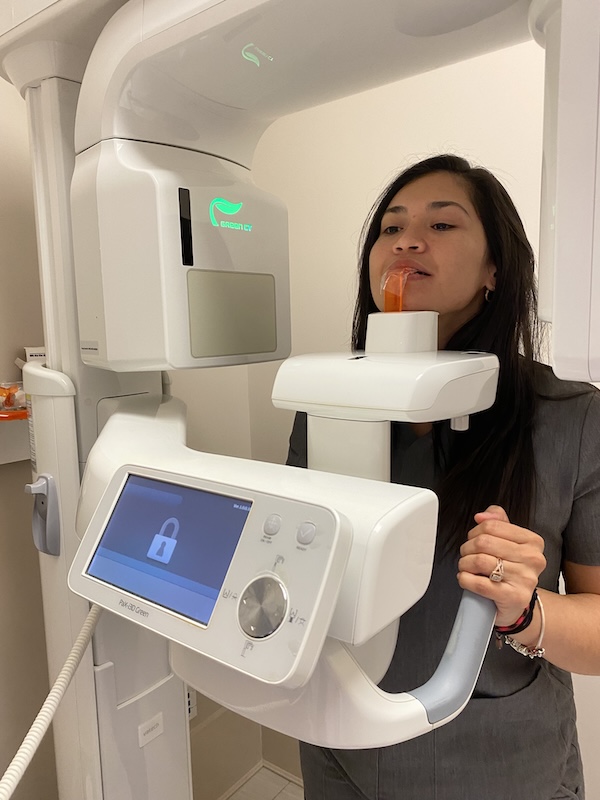
Most of the time, dental crowns are necessary after root canal treatment. Once we treat a tooth with a root canal, we remove a lot of the internal structure of the tooth. We also remove the inside of the tooth, the nerve, and the blood vessels, so the tooth becomes brittle and more susceptible to fracture.
With the posterior teeth, the back teeth that take a lot of pressure and that we need to chew with, crowns are necessary the vast majority of the time. With the front teeth, we decide case by case whether crowns are necessary at this point or not. It could be necessary from a cosmetic standpoint to cover the color or because the tooth had multiple fillings and decay before the root canal. So, it's case by case.
Can you explain the dental crown procedure?
The dental crown procedure goes as follows. We numb the tooth so you're comfortable throughout the procedure. We remove the damaged part of the tooth and the decayed part of the tooth. We rebuild the tooth with a very aesthetic white material to restore it to health. Then we remove some tooth structure, just enough to fit the ceramic on top of the tooth and restore your tooth to function. Most patients find the procedure way easier than they think it is. The crowns look very natural. They're comfortable to chew with. They're strong and they're long-lasting.
How long does it take to place the crown in a patient's mouth?
Usually, it takes about an hour for the crown procedure to get the work done. Here at Loudoun Smile Center, we offer same-day crowns. We have very advanced technology and a milling machine that can produce a ceramic crown the same day. If we're using this technique, it takes about 2 hours to produce the crown, and we're ready to deliver the crown the same day, so no temporary crown is needed.
In other cases, when a temporary crown is needed, the crown has to be scanned. After your tooth has been cleaned and prepared, we take a digital scan. The STL file from the digital scan is sent to the lab. The lab will fabricate the crown within a couple of weeks, and you would wear a temporary crown during those two weeks. Your visit to replace the temporary crown with a permanent crown is about 30 minutes.
Does the dental crown placement hurt?
Usually, dental crown placement does not hurt. You're numb throughout the procedure, so you should not feel anything. Most patients are surprised at how smooth and easy the procedure is.
Are there any consequences for getting a tooth crown?
Dental crowns are a permanent procedure. In order to place the crown on the tooth, we do remove part of the tooth structure, just enough to put the cap on it. So it's a permanent procedure, and it's meant to preserve your tooth and give you strong teeth to chew with or to restore your smile.
Is it worth putting children's teeth in crowns?
Sometimes children can need a crown. We do crowns on baby teeth, and the reason for that is if the child has very extensive decay that has reached the nerve inside the baby tooth. The crown will be necessary to treat the tooth and get that child out of pain. We also use crowns on baby teeth to help maintain the space for the permanent tooth when the baby tooth comes out, so there's space for the permanent tooth to come into the mouth.
Do crowns look like normal teeth?
Crowns do look and feel like normal teeth. We match the size of the tooth, the shape of the tooth, and the color of the tooth. You can chew normally and comfortably with a crown. Most of the time, you don't even remember you have a crown in your mouth. They just function and feel the same way. The only way we find out that you have a crown is by taking an X-ray.
Can you get cavities on crowned teeth?
The crowns themselves do not get cavities. However, the bottom of the crown, the area where the crown meets the tooth, can get decayed if we don't take care of it properly.
How should I take care of my dental crown?
Taking care of dental crowns is the most important thing you can do after having a crown placed. The crown itself does not get a cavity, but the area underneath the crown where the crown meets the tooth can get decayed. The best way to take care of it is to brush your teeth, floss, and use a water pick. If you grind your teeth, you definitely need a night guard or a retainer, and definitely keep your dental visits and dental cleanings.
Crowns can last anywhere between 5 years and 20-plus years. It all depends on how well we take care of the crown, and also if the bite is balanced. Bite is a big part of crown longevity.
Does insurance cover dental crowns?
Most dental insurance plans cover dental crowns partially. It depends on the plan. There are different percentages in the way they cover it, and they cover it for different reasons and in different ways. But here at Loudoun Smile Center, we do a courtesy check. We'll get you all the insurance benefits that your own plan offers, and we will let you know what your out-of-pocket responsibility would be before we start the procedure.
If you're ready to schedule an exam or would like to learn more about our services, we'd love to hear from you. Call us at (703) 297-4407 or email [email protected]. We look forward to caring for your smile.